
With thousands of new residents settling into homes across Maine, many are planning renovations before the first winter sets in. If you’re hiring or working as a contractor here, the rules are straightforward—but different from what you might expect in other states. There’s no statewide “general contractor” license, written contracts are mandatory for most residential projects, local permits are the norm, and employers must carry workers’ compensation insurance.
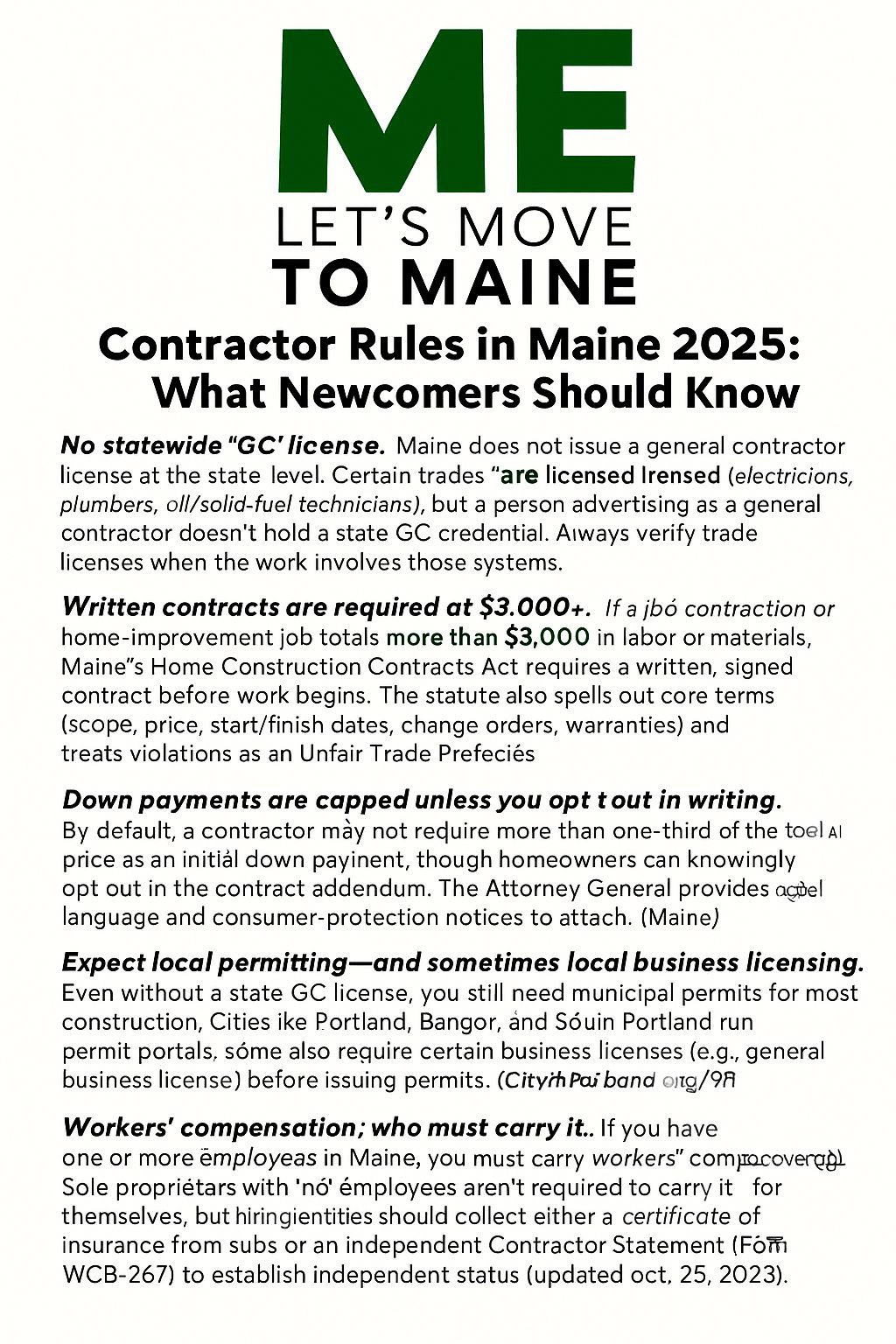
No statewide “GC” license—check trade licenses and local rules
Unlike some states, Maine doesn’t issue a single, statewide general contractor credential. That doesn’t mean it’s a free-for-all. Specialized trades—such as electrical and plumbing—are licensed, and most projects still require local building permits and inspections. Homeowners should verify trade licenses for regulated work and ask contractors which municipal permits are needed before any demolition or construction begins. In larger cities like Portland, permitting has moved online to streamline plan review and inspections.
Written contract required for jobs over $3,000
The most important rule for residential projects is financial: if the job’s value exceeds $3,000 in labor and materials, Maine law requires a written contract signed by both the homeowner (or lessee) and the contractor before work begins. The contract must reflect the entire agreement and include core terms such as scope, price, payment schedule, anticipated start and completion dates, and change-order procedures.
Consumer protection guidance from the Maine Attorney General goes further. It explains that contracts over $3,000 must contain specific provisions—among them a cap on down payments at no more than one-third of the total price (unless knowingly modified), and language addressing workmanship. The AG’s office also notes that violations of the Home Construction Contracts Act can constitute an unfair trade practice, giving consumers additional remedies.
Building codes just tightened: new standards took effect April 7, 2025
Even without a state GC license, projects must meet statewide building and energy standards. Maine’s Uniform Building and Energy Code (MUBEC) governs construction across the state and was updated this spring. Municipalities that enforce MUBEC are required to apply the amended adoption as of April 7, 2025, moving residential work to the 2021 International Residential Code and updating associated energy and mechanical standards. For homeowners, that can affect insulation levels, window performance, air sealing, and mechanical ventilation requirements—details that can influence both costs and comfort.
While MUBEC applies statewide, enforcement is mandatory in municipalities with populations of 4,000 or more; smaller towns may opt in. Newcomers tackling projects in rural areas should still expect to meet code, but should confirm whether the local code office requires plan review or inspections and whether third-party inspection options are available.
Maine’s approach aims to balance flexibility for small businesses with clear consumer protections. The lack of a statewide GC license keeps barriers to entry low, but the $3,000 written-contract threshold, standardized building codes, and universal workers’ compensation requirements create a framework that protects both homeowners and workers. For newcomers eager to renovate, that means fewer surprises—so long as you confirm permits, get everything in writing, and hire pros who understand the 2025 rules.
Have a Maine relocation story or renovation tip to share? Email the newsroom with your questions and experiences navigating local permits and contractors.