
Maine has landed on a new list of states with the highest number of homes at risk for climate-related damage, raising concerns about the long-term safety and affordability of coastal living in the Pine Tree State. The analysis, released by data research firm Cotality, highlights the mounting financial and social costs of climate vulnerability in areas that were once considered relatively sheltered from extreme weather events like hurricanes.
In a housing market where national price growth has slowed and inventory remains at record lows, homebuyers are reevaluating where — and how — they invest. Despite its iconic seaside charm and relatively moderate hurricane exposure, Maine is increasingly being passed over by would-be buyers due to the growing risks associated with climate change, including flooding and wind damage.
The Cotality report points to a shifting “risk profile” along the U.S. coastline, with places like Maine experiencing the ripple effects of stronger storms, higher tides, and more unpredictable weather patterns. While hurricane season may not hit Maine with the same frequency or force as states further south, experts warn that even minor flooding events can cause significant financial strain. According to the Federal Emergency Management Agency (FEMA), just one inch of floodwater can result in up to $25,000 in damage.
“Balancing the cost of beachside living has always been a challenge,” the report notes. “But as the climate shifts, the margin for error grows smaller. The invisible risk is becoming visible — not just in insurance premiums and repair bills, but in declining buyer confidence and property values.”
Maine’s inclusion on the list is especially noteworthy because the state has traditionally been seen as a haven from the most severe impacts of hurricanes and tropical storms. Yet as storm systems grow stronger and more erratic due to warming oceans and rising sea levels, that perception is rapidly changing. Homes along the coast, from York County to Downeast, are now under closer scrutiny by both insurers and potential homeowners.
Data source: Cotality, 2025
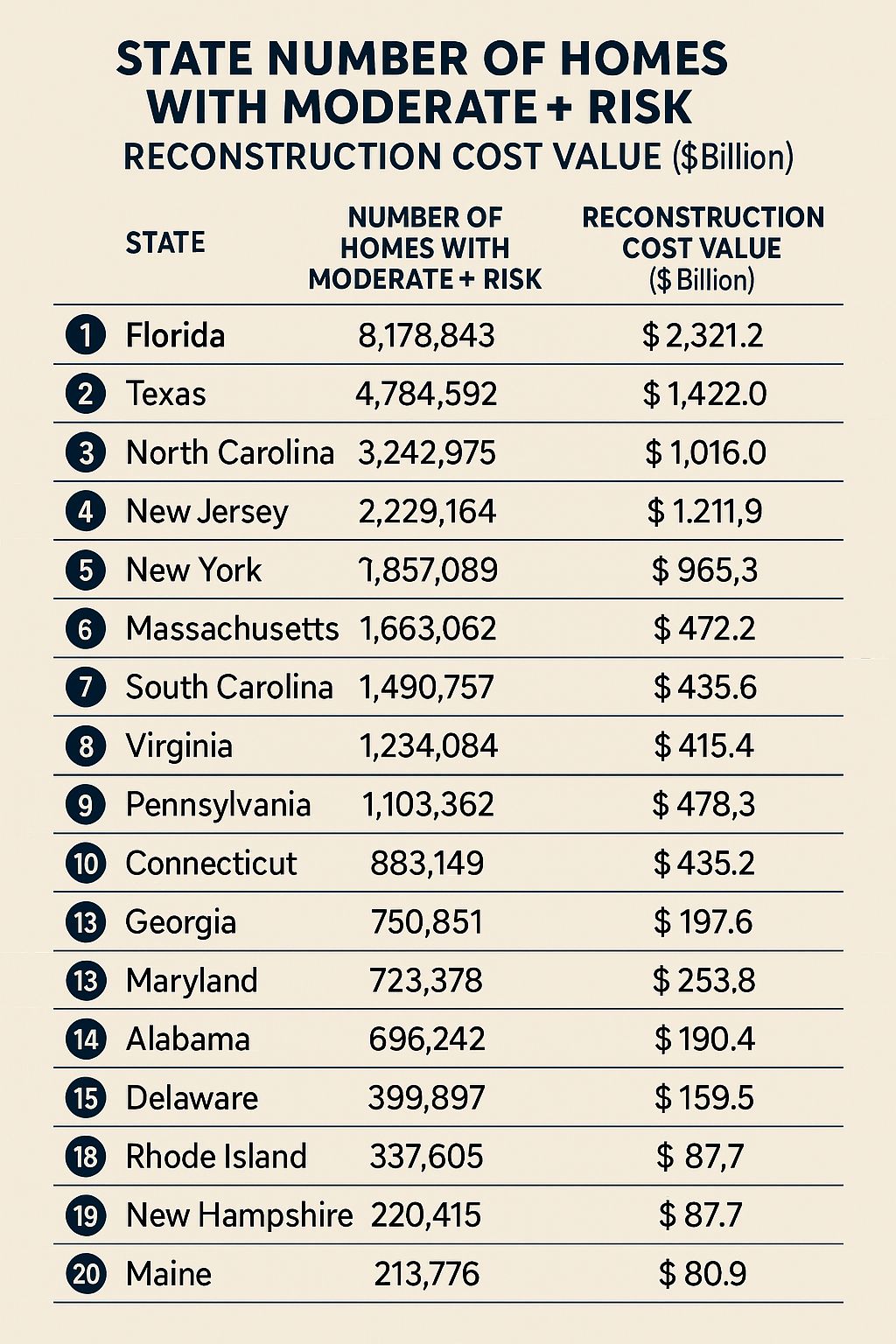
Data source: Cotality, 2025
This latest data adds urgency to conversations among local officials, developers, and residents about resilience and infrastructure. Shoreline reinforcement, stricter building codes, and better emergency planning are all being discussed as ways to adapt to the changing climate — and preserve Maine’s historic coastal communities.
At the same time, experts are urging buyers to consider the long-term implications of climate risk when purchasing property. “It’s no longer just about location — it’s about elevation, drainage, and how well the home can withstand rising tides,” said one analyst.
For a state whose identity and economy are closely tied to its rugged coastline, tourism, and second-home ownership, Maine’s position on the climate risk list is a stark reminder that no region is immune to the broader effects of global warming. And as the market continues to evolve, it may become clear that climate resiliency is not just a public policy issue — it’s a real estate issue too.